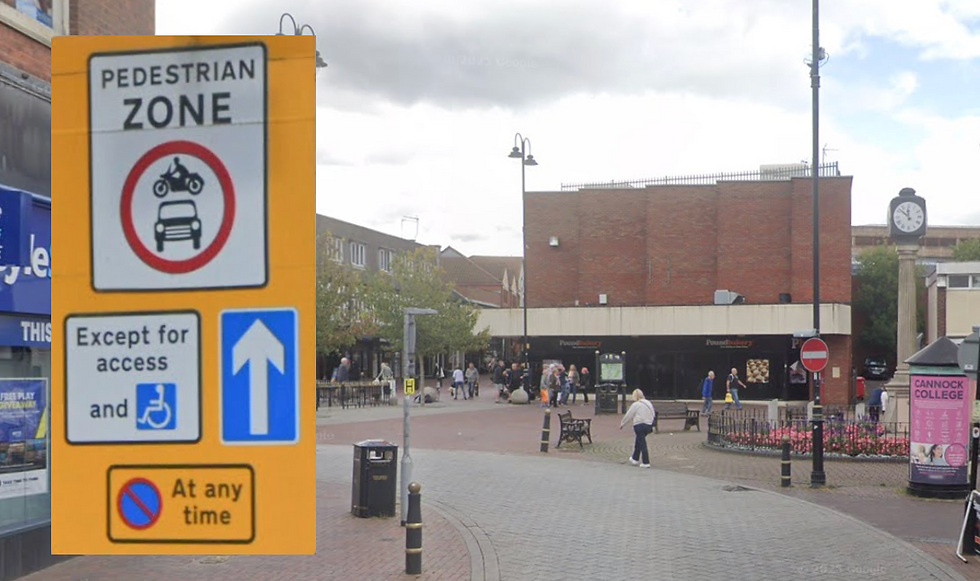
Pedestrian priority zone problems
Len and Olivia have to walk on an unprotected pedestrian priority zone to reach the safety of a raised pavement

Pedestrian priority in name only
Though there are many pedestrian priority zones installed across the country, most include exceptions for access vehicles. This exception immediately takes away the fundamental sense safety and security that a vulnerable person requires in order to venture onto to a pedestrian priority road. The exception permits service and delivery vehicles, as well as cyclists, to use the road at speeds up to 20mph. But there are no instructions to drivers on how they should treat, or give way to vulnerable pedestrians who happen to be walking in the road.
Impact on vulnerable people
Unlike the task of crossing a road or cycle lane, which can be completed when the security of a pavement is reached, for a vulnerable elderly pedestrian, a current pedestrian priority zone is a place of continuous uncertainty.
Many elderly people, such as Len, while not appearing to have poor eyesight, hearing or stability, may well have an increasing combination of all three. As a result, they are particularly concerned about the unexpected, such as a vehicle or cyclist approaching from behind.
The concerns are not unfounded.
If a cyclist collides with a vulnerable pedestrian and falls from his bike, he is likely to be annoyed but his bruises will be healed in a week. If the vulnerable elderly pedestrian also falls, he is likely to break a limb and be incapacitated for months.
For our vulnerable eight-year-old Olivia, the problems are not self-doubt but the inexperience of understanding the limitations that drivers and cyclists have in negotiating with pedestrians for road space.
A more straightforward and universally reliable form of pedestrian priority is needed.
