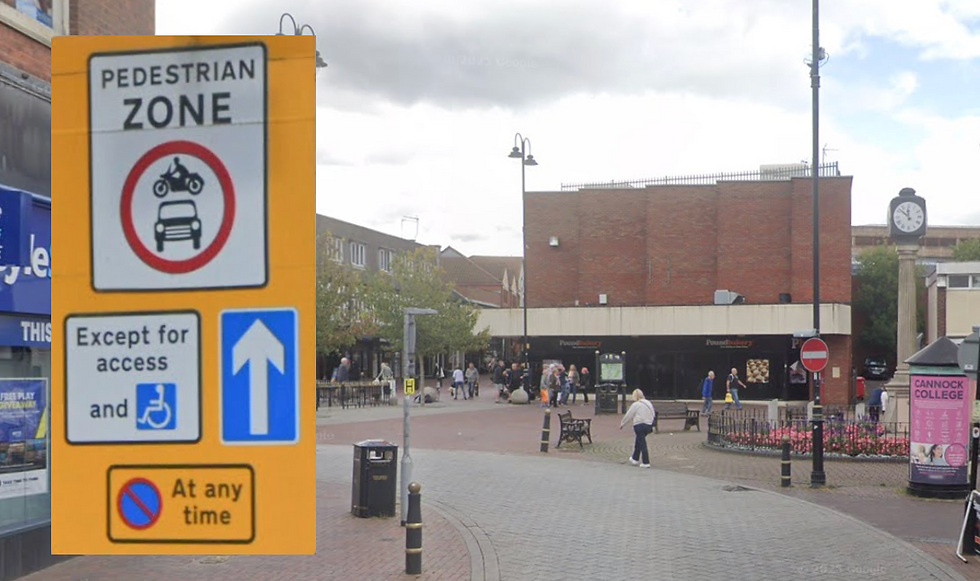
The nagging question remains:
do all of us fully share the rich characteristics of the public realm? There are vulnerable people who may not.
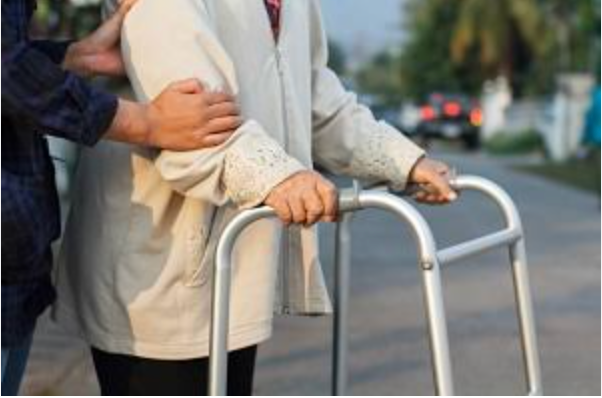
"As we age, we tend to become less physically able but also, which may not be so obvious, less confident in our mobility. Everyday tasks and even walking about the neighbourhood can become more challenging.
It is really important that elderly people are able to feel safe as well as comfortable when they cross a road. If they don't, they won't even try. They will simply stay at home and become less and less independent."
Dr Max J Western, Co-Director, Centre for Motivation and Behaviour Change at the University of Bath
Vulnerable people.
Problems at crossings

Len and Olivia are vulnerable. They need to walk along the High Street pavement (shown in blue) from the bus stop to the library and the Crown public house in Castle Square.
The vulnerable few
Len is pleased that at ninety-six, he’s quite well and walks without a stick. Though he does admit he can’t see quite as well as he could, or hear things coming from behind. Now he has given up his car, his doctor says he must keep active and do things. Each week he tries to meet his old pals in The Crown pub at the town centre. Getting the bus is easy but crossing the roads from the bus stop to the pub is becoming more difficult.
Olivia is a sparky eight-year-old. Her mother isn’t sure she should travel anywhere by herself yet. But it will soon be the time when she is able to go on the bus to the town centre to meet her grandmother. They love going to the library together. But it would mean crossing all those roads.
The Crown pub and the library are both at Castle Square. To reach them from the bus stop, Len and Olivia need to cross four dangerous roads and vehicle routes.
First, almost as soon as they get off the bus, they cross the cycle lane at the High Street bus stop. Then, as they walk down the High Street, they cross School Lane where it meets the High Street. A little further on, they cross Station Road where it joins the roundabout at the High Street. Finally, as they enter Castle Square, they find there is no continuous safe pavement and the so-called pedestrian priority system in the Square allows dangerous, fast moving delivery vans and cycles.
See how (on subsequent pages) during the short walk to Castle Square, they cope with each of the four hazards: a floating bus stop, a side-road crossing, a crossing at a roundabout and at a so-called pedestrian priority zone.